
Baby proofing tends to get planned reactively, parents scrambling once a baby is already pulling up on furniture, rather than proactively during the calmer window before mobility arrives. This guide covers what genuinely needs addressing before crawling begins, what current safety data actually points to as highest risk, and how to prioritize a baby proofing budget across a home.
Why Timing Baby Proofing Before Crawling Matters
Crawling typically begins somewhere between six and ten months, though this varies considerably by individual development, and some babies skip crawling in favor of scooting, rolling, or other creative forms of mobility that arrive on a similarly unpredictable timeline. The practical implication is that baby proofing completed in the newborn stage, well before independent mobility, avoids the scramble that comes with trying to install safety equipment around a baby who’s already actively investigating every accessible corner of a room.
The Consumer Product Safety Commission and the American Academy of Pediatrics both emphasize that home injury risk shifts substantially once a baby becomes mobile, since access to previously unreachable hazards, outlets, cords, stairs, small objects, changes almost overnight once crawling begins in earnest.
Highest Priority Categories, Based on Injury Data
Furniture and TV Tip-Over Prevention

Furniture and television tip-overs remain one of the more serious and often underestimated home hazards, and the CPSC has specifically flagged this as an ongoing priority given the number of child injuries and deaths associated with unanchored dressers, bookshelves, and televisions each year. Anchoring kits, typically consisting of an L-bracket or strap secured into wall studs, are inexpensive and should be applied to any furniture item a curious, climbing baby could potentially pull down on themselves, well before mobility makes this a live concern.
These safety straps keep my TV secure and my kids safe. Easy to adjust and install!
This applies specifically to dressers, bookshelves, and any television not specifically mounted flush to a wall, and anchoring should happen regardless of how sturdy a piece of furniture appears when assessed by an adult, since tip-over risk relates to leverage and a child’s low center of gravity in ways that aren’t always intuitive.
Stair Gates
If your home has stairs accessible to a mobile baby, gates installed at both the top and bottom matter significantly, and the specific gate type differs by location. Top-of-stairs gates should be hardware-mounted, screwed directly into the wall or banister, rather than pressure-mounted, since a pressure-mounted gate can potentially give way under a child’s weight or an adult’s accidental bump, posing a fall risk specifically dangerous at the top of a staircase.
Bottom-of-stairs gates can reasonably use either pressure-mounted or hardware-mounted designs, since a fall risk at the bottom of stairs is considerably less severe than at the top, though hardware-mounted still offers more consistent security if you’re choosing between comparable options.
This pressure mounted baby gate is a lifesaver. Super easy to set up and adjust!
Outlet Covers and Outlet Plate Covers
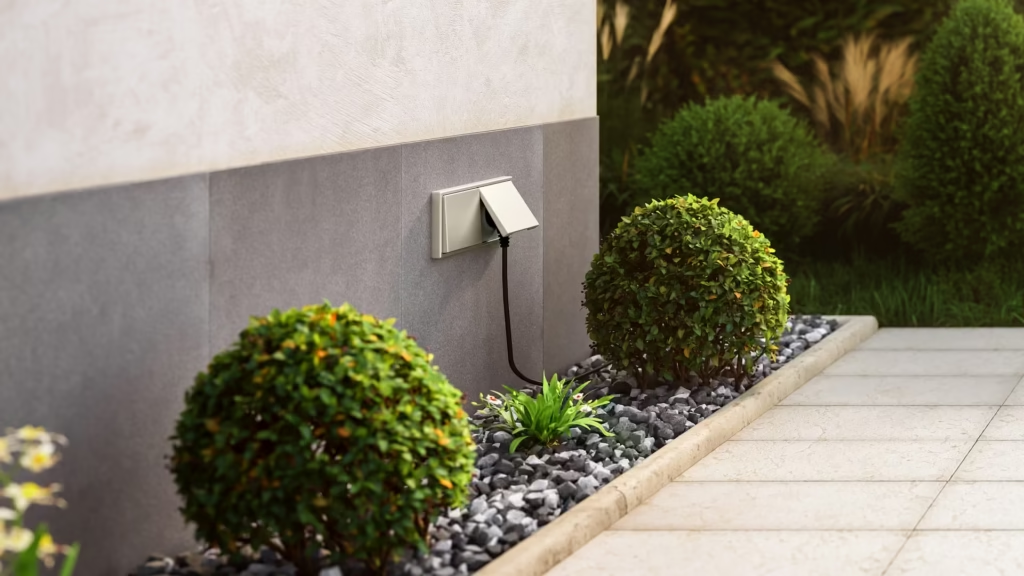
Basic outlet covers, either simple plug-in caps or sliding plate covers that automatically close over an unused outlet, address a well-established hazard once babies begin exploring with their hands and mouths. Sliding plate covers generally offer more convenience than individual plug-in caps, since they don’t require removal and replacement each time an outlet is actually used, which matters for adult convenience and reduces the likelihood of a cap being left out and become a separate choking hazard.
These outlet covers are a must for every home with kids. So easy to install!
Cabinet and Drawer Locks
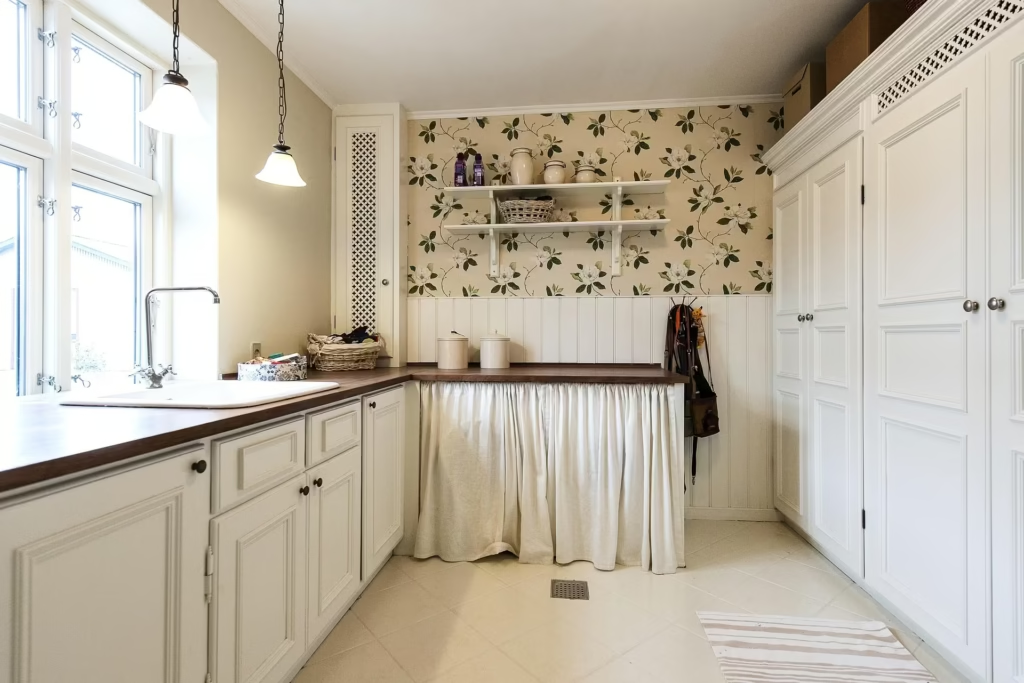
Cabinets containing cleaning supplies, medications, or small objects that pose choking hazards should be secured with childproof latches before mobility begins, particularly in the kitchen and bathroom where these hazards concentrate. Magnetic locking systems offer a relatively invisible solution that doesn’t require a visible latch mechanism on cabinet exteriors, though simpler adhesive strap locks work perfectly well and cost considerably less.
Cord Safety for Blinds and Curtains
Window covering cords represent a specific and well-documented strangulation risk, and the Window Covering Safety Council alongside the CPSC have pushed for cordless designs industry-wide in recent years. For homes with existing corded blinds, cord cleats or wind-up devices that keep cords secured well above a baby’s reach, or replacing blinds entirely with cordless versions, addresses this risk directly rather than relying on simply remembering to keep cords out of reach informally.
Secondary Priority Categories
Corner and Edge Guards
Soft foam or rubber guards applied to sharp furniture corners, particularly coffee tables, fireplace hearths, or other low, hard-edged furniture at a crawling baby’s head height, reduce injury severity from the inevitable bumps and falls that occur once a baby starts pulling up and cruising along furniture.
These corner protectors are a must for keeping little ones safe at home!
Doorknob Covers
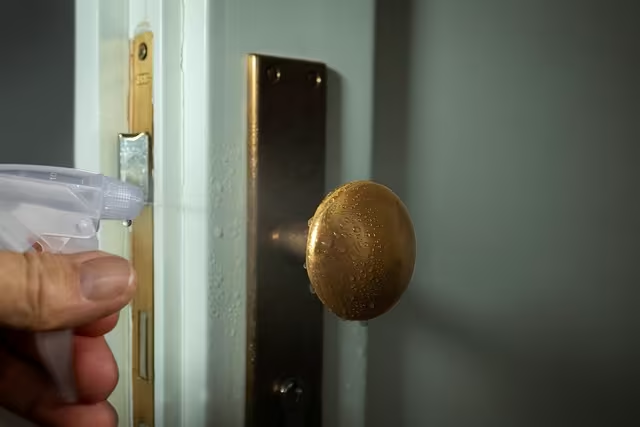
Covers that make doorknobs harder for small hands to grip and turn help keep mobile babies out of specific rooms, like a laundry room with cleaning supplies or a home office with small objects, though these are generally lower priority than the categories above unless a specific room in your home poses genuine hazard concentration.
Toilet Locks
A simple latch preventing a mobile baby from lifting a toilet lid addresses both a drowning risk, since young children can topple forward into even a small amount of water, and a broader hygiene concern, and this becomes relevant once a baby can pull up to standing height near a toilet.
Fireplace and Hearth Guards

For homes with a fireplace, a padded hearth guard or a more substantial gate enclosure addresses both the sharp edge risk of a raised hearth and the burn risk if the fireplace is in active use during colder months when a baby might also be increasingly mobile.
This hearth cushion is a must-have for any family with little ones. It’s super comfy and keeps everyone safe.
Baby Proofing Products With Limited or Debated Value
Furniture Bumpers for Every Surface
While corner guards on genuinely sharp, low furniture edges have clear value, applying bumpers to every conceivable surface in a room can be excessive relative to actual injury risk, and prioritizing based on furniture height relative to a crawling or early-walking baby’s head, along with genuine sharpness of edges, helps focus this category rather than over-purchasing.
Try to keep your little ones safe with these clear edge protectors! Perfect for all your furniture.
Baby Proofing “Kits” With Excessive Component Counts
Large all-in-one baby proofing kits sometimes include components that don’t apply to every home, multiple types of cabinet locks when only one style suits your specific cabinet hardware, for instance. Assessing your specific home’s cabinet and drawer hardware before purchasing a kit, or buying individual components based on an actual room-by-room walkthrough, tends to produce a more accurately matched set of products than a generic bundle.
I’m thrilled to share my safety essentials for little ones! Keep them safe with these great kits.
Outlet Covers for Outlets Behind Furniture
Outlets already blocked by a permanently placed piece of furniture, like behind a couch pushed against a wall, generally don’t need individual covers, and recognizing which outlets are genuinely accessible to a mobile baby, versus which are incidentally blocked by existing furniture placement, avoids unnecessary purchasing and installation effort.
Keep little hands and feet safe with these outlet covers!
How to Conduct a Room-by-Room Safety Walkthrough
A practical approach to prioritizing baby proofing involves getting down to a baby’s eye level, literally kneeling or crawling through each room, to identify hazards that aren’t obvious from an adult’s standing perspective. Loose cords, small objects within reach, sharp furniture corners at head height, and unsecured furniture all become considerably more apparent from this vantage point than from a typical adult viewpoint.
Starting with the rooms where a baby will spend the most time, typically the living room, nursery, and kitchen, then expanding outward to less frequently accessed spaces, allows baby proofing effort and budget to concentrate where it matters most first, rather than spreading thin across an entire home simultaneously.
Common Mistakes to Avoid
Delaying furniture and TV anchoring specifically because a baby “isn’t mobile yet” is one of the more common and genuinely risky oversights, since anchoring is inexpensive, quick to install, and carries no downside to completing well before it becomes urgently necessary.
Choosing pressure-mounted gates for the top of a staircase, rather than hardware-mounted, introduces a fall risk specifically at the location where a fall carries the most serious potential consequence, and this distinction is worth getting right even if hardware-mounted installation requires slightly more effort.
Assuming a baby proofing product is inherently effective simply because it’s marketed for this purpose, without checking installation instructions or confirming a snug, secure fit specific to your own furniture, doors, or cabinet hardware, can result in a false sense of security around a product that isn’t actually installed correctly.
Overlooking less obvious hazards during a standing-height assessment, small objects on low shelves, trailing cords behind furniture, unstable rugs on hard flooring, that only become apparent from a baby’s-eye-level walkthrough of each room.
Final Considerations
There isn’t a universal baby proofing checklist that applies identically to every home, since layout, existing furniture, and specific hazards like stairs or a fireplace vary considerably between households. Prioritizing furniture and TV anchoring, stair gates, outlet covers, and cabinet locks addresses the categories most clearly supported by injury data, while additional products like corner guards and doorknob covers can be added based on your home’s specific layout and a genuine room-by-room walkthrough.
Completing this work before crawling begins, rather than reactively once mobility has already arrived, provides a meaningfully calmer preparation window and avoids the scramble that comes with baby proofing around an already-mobile, curious baby actively testing every corner of a newly accessible home. Prioritizing genuine injury-data-supported categories over exhaustive, low-value product accumulation will serve your specific home and budget better than attempting to address every conceivable hazard simultaneously.