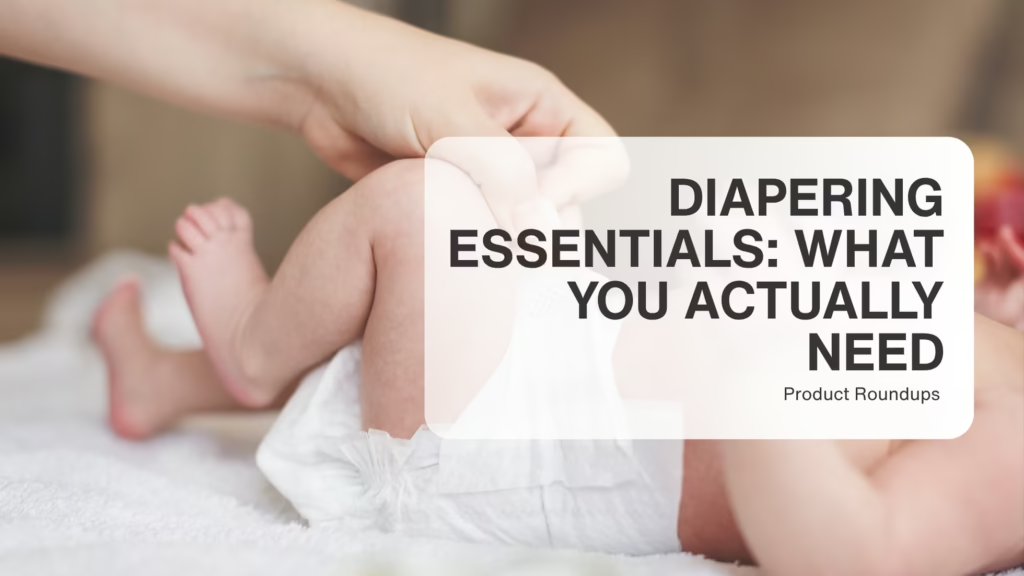
Let’s start with the diapering essentials nobody tells you upfront: you are about to change somewhere between 2,000 and 3,000 diapers this year. Say that number out loud once, feel a little unhinged about it, and then let it go, because the good news is the actual list of diapering essentials is short. Shorter than the registry checklist wants you to believe.
If you’ve already bought a giant case of newborn diapers “just to be safe” and now you’re staring at a pile she’s already outgrown, you’re not bad at this. You made a completely reasonable guess with information nobody can actually give you in advance. Let’s build the list that would’ve saved you the guesswork.
The Basic Math Behind Diapering Essentials
Newborns go through roughly 8 to 12 diapers a day in the first few weeks, easing down to about 6 to 8 daily by a few months old as her bladder capacity grows and feeding spaces out. That adds up fast, which is exactly why getting your diapering essentials sorted early matters, not because you need more stuff, but because you need the right amount of the right stuff.
Disposable Diapering Essentials
How Sizing Actually Works (and Why It Trips Everyone Up)
Diaper sizing runs on weight, not age, and it’s genuinely inconsistent between brands: a size 1 in one brand might run small or large compared to another. Newborn size usually covers up to about 10 pounds, and some babies skip it entirely if they’re born bigger.
Here’s your permission slip: buying a big bulk pack of newborn diapers before birth is one of the most common diapering mistakes, and it’s not a sign you didn’t plan well enough. It’s just genuinely unpredictable. A baby who arrives large, or grows fast in the first weeks, can blow through that stockpile before you’ve used half of it. Buy small, reorder based on what’s actually happening on her body, not what you guessed months ago.
Choosing a Brand Without the Decision Fatigue
Among the essentials for diapering, brand choice causes more stress than it needs to. Pampers Swaddlers and Huggies Little Snugglers are two of the most common newborn-specific lines, both built with a cutout notch to avoid rubbing against a healing umbilical cord. Brands like Honest Company lean fragrance-free and plant-based, which some parents prefer, though absorbency can be a little less consistent than major conventional brands, so it’s worth a quick check of recent reviews before committing.
If budget’s tight (and whose isn’t, six weeks from returning to work and doing mental math on childcare costs), store brands like Kirkland Signature or Target’s Up & Up perform comparably to name brands in independent testing, at a noticeably lower cost per diaper.
The real move: buy a small pack of two or three brands before going all-in on one. Fit varies by baby, not just by brand reputation, and a diaper that works beautifully for your friend’s baby might leak constantly on yours. That’s not a defect in you or her. Bodies are just different shapes.
Overnight diapers are worth the slightly higher cost once her sleep stretches get longer. A 3am leak-related outfit and sheet change costs you more sleep than the extra few cents per diaper ever will.
Cloth Diapering Essentials
If cost savings over time or environmental impact matter to you, cloth is a legitimate diapering essentials path, not just a Pinterest aesthetic. The upfront investment is real, but it tends to even out, especially if you reuse the stash for a second child.
Prefolds and covers are the most budget-friendly entry point, though they take the most hands-on folding.
All-in-ones work most like a disposable: one piece, no separate insert, which makes them the easiest option for caregivers or daycare providers less familiar with cloth systems.
Pocket diapers sit in the middle: a waterproof shell with a removable insert, giving you some flexibility on absorbency.
Beyond the diapers themselves, cloth diapering essentials include a wet bag (waterproof, zippered, for soiled diapers pre-laundry) and cloth-safe diaper cream. Standard zinc oxide or petroleum creams can quietly wreck absorbency over repeated washes, so cloth-specific cream or a liner avoids that entirely. Skip fabric-softener detergents too; they do the same damage over time.
The Supporting Cast: Diaper Changing Essentials
Beyond the diapers themselves, a few supporting items round out your diapering essentials list:
Wipes. Fragrance-free, alcohol-free ones reduce irritation on newborn skin. Buy these in bulk without guilt. They get used for far more than diaper changes, and unlike diapers, there’s no sizing risk to worry about.
Diaper rash cream. Zinc oxide-based creams are the most established option here. Having a tube on hand before you need it beats a 9pm emergency drugstore run mid-rash.
A diaper pail. Branded systems like the Diaper Genie or Ubbi work well, but a regular trash can with a tight lid does the job too, especially in a smaller apartment where odor control matters more given how close the nursery might be to everything else.
A changing pad and a couple of washable covers, so you’re not stuck wiping down and waiting on one pad to dry between changes.
A diaper caddy you can move room to room. Small thing, genuinely saves you from climbing stairs mid-blowout with your hands full.
Diapering Essentials Sizing Strategy
Buy a small amount of newborn size, one to two weeks’ worth, and a slightly larger stash of size 1, since most babies move into that size within the first month regardless of where they started. And register for a range of sizes, not just newborn, since well-meaning gift-givers almost always default to the smallest size without realizing how fast she’ll outgrow it.
Mistakes Worth Skipping (So You Don’t Have To Learn Them the Hard Way)
- Overbuying newborn size before birth. Understandable, not necessary.
- Committing to one brand without testing. A small multi-brand pack costs less than a bulk pack that leaks.
- Using regular rash cream on cloth diapers. It’s an easy mistake with a fix that’s easier than the mistake itself: cloth-safe cream or a liner.
- Underestimating how many wipes you’ll actually use. It’s a lot. It’s fine. Buy the bulk pack.
The Bottom Line on Diapering Essentials
There’s no single right approach. Disposable convenience, cloth’s long-term savings, and your actual budget and bandwidth all factor in, and none of those reasons need defending to anyone. The real diapering essentials are simpler than the registry made them look: the right size in small batches, wipes and rash cream ready before you need them, and a system that fits your specific life instead of someone else’s Instagram nursery.
You don’t need to get this perfect on the first try. You just need enough diapers, in the right size, and permission to change your mind when the first plan doesn’t fit her the way you expected.