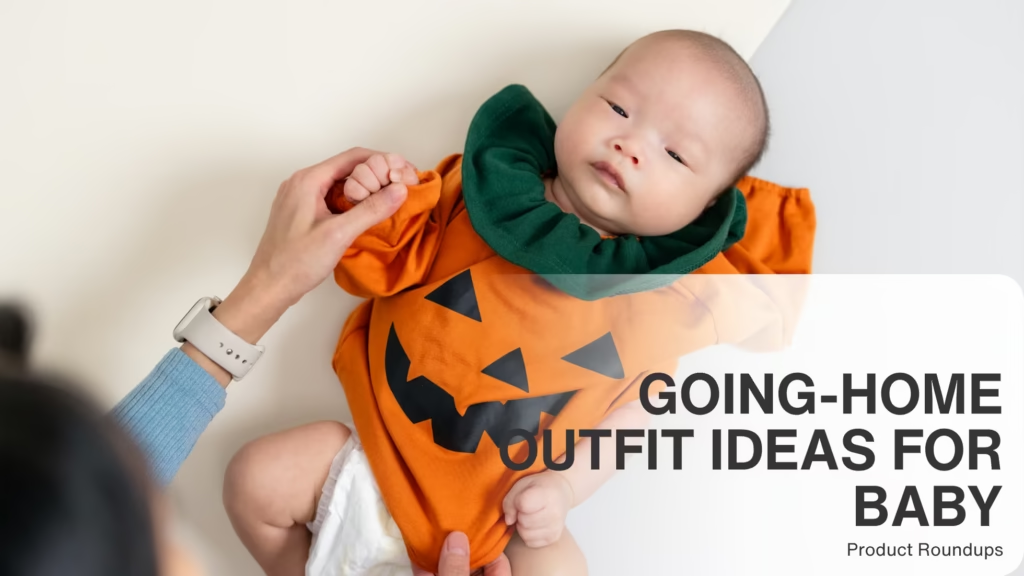
The going-home outfit occupies a strange but meaningful place in newborn preparation. It’s one of the few baby clothing items that gets photographed extensively, worn for only a few hours, and yet causes genuine planning anxiety for a lot of first-time parents trying to guess a size weeks or months in advance. This guide covers sizing strategy, seasonal considerations, and practical features worth prioritizing over pure aesthetics.
Why Going-Home Outfit Sizing Is Genuinely Tricky
Unlike most newborn clothing decisions, the going-home outfit needs to be ready before you know your baby’s actual size, since you’re dressing them within the first day or two of birth. Average newborn weight in the US falls somewhere between 6 and 9 pounds, but the range of normal, healthy birth weights extends well beyond this average in both directions, and predicting where your specific baby will land is imprecise even with growth scans late in pregnancy.
This is the core reason most experienced parents and baby registry guides recommend having at least two sizes ready, typically newborn size and 0-3 months, rather than committing to a single size purchased in advance.
Sizing Strategy: What to Actually Buy
Buy at Least Two Sizes
Newborn size generally fits babies up to about 8 or 9 pounds, though this varies by brand, while 0-3 month sizing tends to run larger and provides a backup if baby arrives above the newborn size range or grows quickly in the first days before hospital discharge. Having one outfit in each size ready avoids the scenario of a going-home outfit that’s uncomfortably tight or comically oversized in photos you’ll likely look back on for years.
Consider the Umbilical Cord Stump
The umbilical cord stump remains attached for one to three weeks after birth, and clothing that rubs directly against this healing area can cause irritation. Outfits with a cutout or fold-down waistband specifically designed to avoid contact with the stump, common in many newborn-specific lines, reduce this friction, though a simple loose-fitting outfit without direct waistband pressure on the stump generally works fine even without a specific cutout feature.
Prioritize Easy Access for Diaper Changes and Hospital Monitoring
Snap closures, ideally running the full length of the outfit from neck to ankle or at minimum through the crotch area, matter significantly more than they might seem to for a purely aesthetic clothing choice. Hospitals typically want relatively easy access for checking vitals, and frequent diaper changes in the first hours make a full-snap design considerably more practical than an outfit requiring removal for every change.
Seasonal and Climate Considerations
Warm Weather Going-Home Outfits
For babies born in warmer months, a lightweight cotton bodysuit or gown, without heavy layering, keeps baby comfortably regulated without overheating. A simple cotton hat still makes sense for warmth regulation and photos, even in summer, since newborns lose heat quickly regardless of ambient outdoor temperature, but heavy layers or thick blankets aren’t necessary for a car ride home in warm weather.
Cold Weather Going-Home Outfits
For colder months, layering matters more, though it’s worth noting car seat safety guidance specifically advises against bulky snowsuits or heavily padded outerwear worn underneath the car seat harness, since thick padding compresses under crash force and can compromise harness fit. The safer approach for cold weather involves dressing baby in a warm but not bulky outfit, then adding a blanket over the buckled harness for the car ride, rather than dressing baby in a thick coat or snowsuit underneath the straps themselves.
A knit hat and swaddle blanket for the car ride, removed once inside a warm home, provides flexibility without compromising car seat safety during the drive itself.
Hospital Temperature Considerations
Hospitals tend to keep rooms warm, often warmer than a typical home, which is worth factoring into what you bring for the actual hospital stay versus the specific outfit for the drive home, since baby may be more comfortable in lighter layers during the hospital stay itself regardless of outdoor season.
Outfit Style Options
Gowns and Sleeper-Style Outfits
A simple gown or footed sleeper, with an elastic or drawstring bottom hem rather than fitted footholes, accommodates a range of sizes more forgivingly than a fitted outfit with distinct leg openings, since the loose bottom hem doesn’t require an exact size match to look and fit appropriately.
Traditional Two-Piece Outfits
A onesie paired with a separate pair of pants or a cardigan offers more visual variety for photos and allows mixing and matching if one piece runs larger or smaller than expected, compared to committing to a single one-piece outfit that either fits well or doesn’t.
Special Occasion or Family Tradition Outfits
Some families use a specific heirloom outfit, a christening gown, a specific pattern passed down, or a coordinated sibling outfit for photos. If using a special or delicate outfit for photos specifically, having a more practical, easy-change backup outfit for the actual car ride and diaper changes avoids potentially damaging a sentimental piece during a moment when spit-up or a diaper blowout is more likely than not.
Gender-Neutral and Unisex Options
Many parents specifically choose not to learn or reveal the baby’s sex before birth, or simply prefer neutral colors and patterns regardless. Neutral tones like white, cream, sage green, or soft yellow work well for going-home outfits without requiring advance knowledge of the baby’s sex, and this approach also allows the same outfit to be reused for a future sibling regardless of their sex.
Fabric Considerations
Cotton remains the most commonly recommended fabric for newborn clothing generally, given its breathability and gentleness against sensitive skin, compared to synthetic blends that can trap heat or feel less soft against a newborn’s more delicate skin barrier. Organic cotton options exist at a premium price point, though standard cotton is generally considered perfectly suitable unless a specific skin sensitivity has already been identified.
Washing any new outfit before use, including a going-home outfit, removes manufacturing residue and any potential irritants, and using a fragrance-free, dye-free detergent for this first wash reduces the chance of skin reaction during an outfit’s very first wear.
What to Bring as Backup
Given the unpredictability of exact newborn size, along with the near-certainty of at least one diaper blowout or spit-up incident during a hospital stay, bringing a backup going-home outfit in a different size, along with a couple of onesies as simpler alternatives, provides real flexibility if the primary planned outfit doesn’t fit as expected or gets soiled before you actually leave the hospital.
Common Mistakes to Avoid
Buying only one size, based on an assumption about baby’s likely weight, creates real risk of an outfit that doesn’t fit either direction, too small if baby arrives larger than expected, or comically oversized if baby arrives smaller or is born early.
Choosing an outfit based purely on how it photographs, without considering snap placement or ease of diaper access, can create real friction during a hospital stay involving frequent changes and monitoring in the first hours after birth.
Overdressing for a cold-weather car ride by placing a bulky coat or snowsuit underneath the car seat harness compromises harness safety in a way that’s easy to overlook amid the excitement of finally heading home, and this is worth planning for specifically rather than defaulting to typical adult winter dressing instincts.
Skipping the pre-wear wash, assuming a brand new outfit is automatically clean and ready to use, can expose sensitive newborn skin to manufacturing residue or potential irritants that a simple wash easily removes beforehand.
Final Considerations
There isn’t one single best going-home outfit, since climate, family traditions, and personal style preferences all shape what feels right for this specific, often heavily photographed moment. Buying at least two sizes, prioritizing full-length snap closures for practical hospital and diaper-change access, and keeping car seat safety guidelines in mind for cold weather dressing will matter more for a smooth experience than any specific outfit style or aesthetic choice.
Whatever outfit you choose, having a practical backup ready, in both a different size and a simpler style, means you’re prepared regardless of how baby’s actual size or the realities of a hospital stay unfold, letting you focus on the moment itself rather than a wardrobe malfunction on the way out the door.