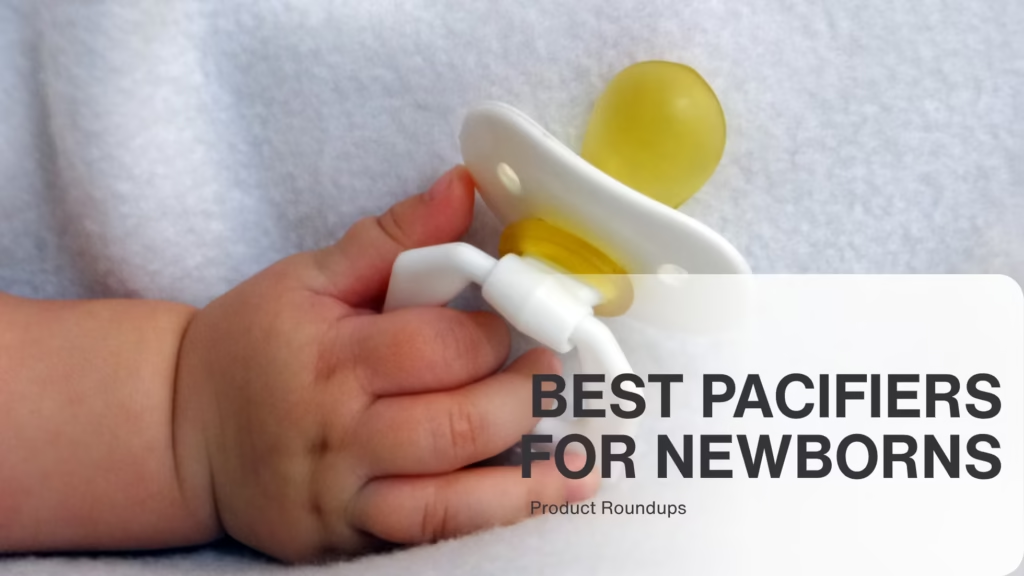
Choosing a pacifier seems like it should be simple, but nipple shape, size, material, and even ventilation design all affect whether a newborn accepts a pacifier and whether it supports healthy oral development. This guide covers the main pacifier types available, what pediatric dental research says about shape and long-term oral health, and how to navigate pacifier use alongside breastfeeding.
Why Pacifier Design Matters
Newborns have a strong sucking reflex that serves both a feeding purpose and a self-soothing one. Non-nutritive sucking, meaning sucking that isn’t tied to feeding, has been associated with calming effects and, according to some research reviewed by the American Academy of Pediatrics, a possible reduced risk of Sudden Infant Death Syndrome when a pacifier is used at naptime and bedtime.
That said, not every pacifier shape or material suits every baby, and choosing poorly can lead to rejection, nipple confusion in breastfed infants, or long-term dental concerns if a specific design is used well past the recommended weaning age.
Types of Pacifier Nipple Shapes
Orthodontic Nipples
Orthodontic pacifiers feature a flattened, asymmetrical shape on the side that rests against baby’s tongue, designed to mimic the shape a nipple takes inside a baby’s mouth during breastfeeding. Brands like NUK and MAM popularized this design specifically to reduce pressure against the roof of the mouth and front teeth compared to a fully round shape.
Pediatric dental research generally favors this shape for reducing the likelihood of dental misalignment with prolonged use, though any pacifier used past the toddler years carries some risk of affecting bite alignment regardless of shape.
Round or Cherry-Shaped Nipples
These use a symmetrical, round bulb shape, meaning the pacifier works the same regardless of orientation in baby’s mouth, which some parents find easier during middle-of-the-night replacements when a baby spits it out. Soothie pacifiers, widely used in hospital settings, fall into this category.
The symmetrical shape means less concern about inserting it “incorrectly,” though some pediatric dentists suggest the fully round shape may exert more even pressure against the palate compared to a flattened orthodontic design during extended use.
Flat-Bottomed or Button Nipples
This style flattens more dramatically than a traditional orthodontic shape, aiming to closely replicate breast tissue shape for babies transitioning between breast and pacifier. Brands like Natursutten market this shape specifically toward breastfeeding babies who show sensitivity to bulkier, more traditional pacifier shapes.
Material Considerations
Silicone is the most common pacifier material today, valued for being non-porous, easy to sterilize, odorless, and generally more durable against biting once teeth start coming in. It doesn’t degrade as quickly under heat exposure from sterilizing or dishwashing compared to latex.
Natural rubber latex offers a softer, more flexible feel that some babies take to more easily, particularly in the newborn stage. The tradeoff is a shorter lifespan, since latex degrades faster with repeated sterilization and exposure to saliva, and it requires replacement more frequently. Latex also isn’t suitable for babies with a latex allergy or strong family history of latex sensitivity, which is worth discussing with a pediatrician if this applies to your family.
Both materials are generally considered safe when sourced from reputable brands and replaced on the manufacturer’s recommended schedule, typically every four to six weeks for regular use, or sooner if any cracking, stickiness, or discoloration appears.
Sizing Guidelines
Pacifiers are typically sized by age range, most commonly newborn to three months, three to six months, and six months and up. Sizing relates both to nipple size and shield size, since a shield too small could pose a choking hazard as baby grows, while a shield too large may feel uncomfortable or unwieldy for a very young newborn.
Always check the specific weight or age recommendation on the packaging rather than assuming one size fits a wide range, and size up as recommended even if baby seems to still physically fit an older, smaller pacifier, since manufacturers size based on safety testing specific to each range.
Pacifier Shield Design
The shield, meaning the part that sits against baby’s face outside the mouth, should include ventilation holes to reduce moisture buildup and skin irritation against baby’s face and to reduce suffocation risk in the unlikely event a baby manages to fit more of the pacifier in their mouth than intended.
Shield size also matters for comfort. A shield that’s too large can press uncomfortably against a small newborn’s face, while looking for a curved shield shape, rather than a completely flat one, can improve comfort for some babies by conforming more closely to facial contours.
One-Piece vs. Multi-Piece Design
One-piece pacifiers, molded entirely from a single piece of silicone with no separate nipple and shield components, reduce the risk of the pacifier coming apart, since there are no separate pieces that could loosen over time or after repeated washing. This design has grown more popular partly for this added safety margin.
Multi-piece pacifiers, with a separate nipple attached to a shield, sometimes offer more shape variety and replaceable nipples, but require more careful inspection over time to ensure the pieces remain securely attached, since wear at the joint between pieces is where these designs most commonly fail.
Pacifiers and Breastfeeding
The American Academy of Pediatrics recommends waiting to introduce a pacifier until breastfeeding is well established, generally around three to four weeks, to reduce the risk of nipple confusion or interference with milk supply during the critical early weeks of establishing a feeding routine.
This guidance isn’t absolute, and some hospitals do use pacifiers immediately after birth for specific medical reasons, such as calming a baby during a procedure. But for general at-home use, most lactation consultants recommend holding off on introducing a pacifier for non-medical, everyday soothing until breastfeeding has been going well for a few weeks.
If you notice reduced interest in nursing after introducing a pacifier, or difficulty maintaining a good latch, it’s worth pausing pacifier use and discussing the timing with a lactation consultant or pediatrician.
Popular Pacifier Options and How They Compare
Philips Avent Soothie is widely used in hospitals immediately after birth, largely due to its simple, one-piece silicone design and round nipple shape that many newborns take to easily in those first days.
MAM Perfect Pacifier uses a symmetrical orthodontic-inspired shape along with a self-sterilizing case that uses microwave steam sterilization, appealing to parents who want a built-in cleaning solution alongside the pacifier itself.
NUK Orthodontic Pacifier offers a classic flattened orthodontic shape backed by extensive market history, and is often recommended by pediatric dentists specifically because of this shape’s long track record.
Natursutten Pacifier uses natural rubber and a distinctly flatter, rounder shield, appealing to parents specifically seeking a softer, more natural material alternative to silicone.
WubbaNub combines a Soothie-style pacifier with an attached small stuffed animal, making it easier for very young babies to keep in place without loose fabric near the face, since the small plush attachment gives a slightly heavier, easier to grip base, though it should be phased out once baby can grasp separate toys independently, per general safe sleep guidance around loose items in the crib.
Common Mistakes to Avoid
Continuing to use a pacifier that shows cracking, stickiness, or discoloration poses a choking risk if small pieces break off, and these signs mean immediate replacement is necessary regardless of how recently the pacifier was purchased.
Attaching a pacifier clip with a long strap or ribbon for use inside the crib creates a strangulation risk. Pacifier clips are intended for use while baby is awake and supervised, not for overnight crib use, and any clip or attachment should be removed before placing baby down to sleep.
Introducing a pacifier too early, before breastfeeding is well established, can interfere with latch and supply for some babies, though this varies individually and isn’t universal.
Using an incorrectly sized pacifier, particularly one sized for an older baby with a larger shield, can be uncomfortable or unwieldy for a newborn, while an outgrown, too-small pacifier should be sized up according to manufacturer guidance rather than continued out of convenience.
When to Consider Weaning
The AAP and most pediatric dentists recommend weaning off pacifier use somewhere between six months and two years, largely to reduce the risk of dental alignment issues that become more likely with prolonged use past the toddler stage. Weaning earlier rather than later, generally before age two, tends to reduce the likelihood of needing orthodontic intervention later on, according to pediatric dental guidance.
Every family approaches weaning differently, and there’s no single correct timeline, but being aware of this general window helps inform when to start considering the transition rather than continuing indefinitely by default.
Final Considerations
There isn’t one universally best pacifier, since individual babies show clear, sometimes surprising preferences for specific shapes and materials that can be difficult to predict in advance. Many parents find it useful to purchase a small variety of shapes early on, rather than committing to a large supply of just one type, since a baby who firmly rejects one shape may take to another immediately.
Prioritizing proper sizing, ventilated shield design, and a one-piece or well-secured multi-piece construction will matter more for genuine safety than brand recognition alone. Since pacifier preferences are so individual, treating the first purchase as something of an experiment, rather than assuming a single “best” option exists universally, tends to save both money and frustration in those first uncertain weeks.